Rad Power RadRover 6 Plus Review: Best Fat Tire E-Bike for the Money?
We may earn a commission on qualifying purchases through links on this page, at no extra cost to you. Our recommendations are based on independent research — manufacturer specifications, independent lab data, and aggregated owner reports — not on commission rates.
Our Verdict
Rad Power Bikes
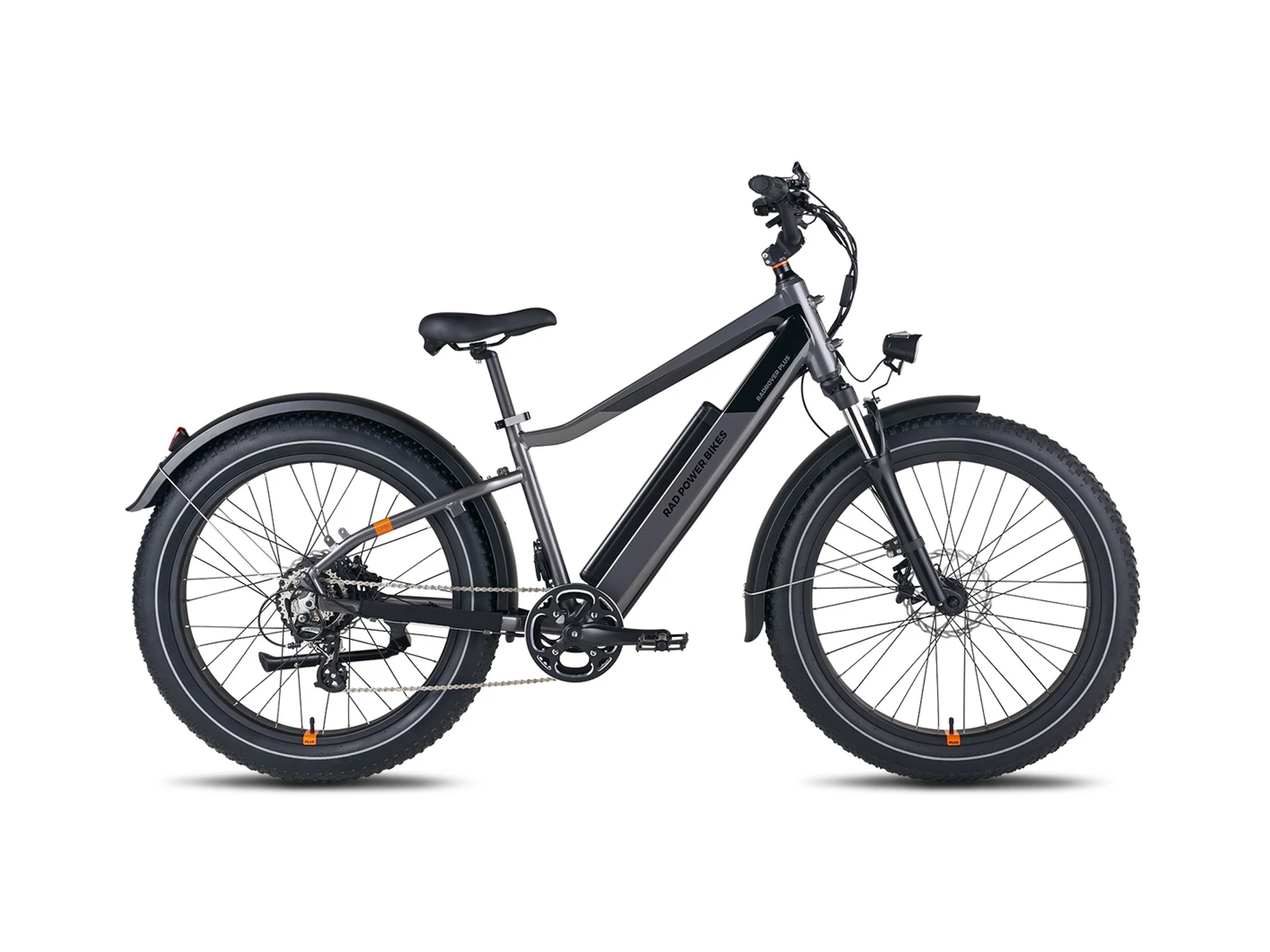
Rad Power RadRover 6 Plus — America's best-selling e-bike brand. 750W geared hub motor, 4-inch Kenda fat tires, hydraulic disc brakes, up to 45-mile range.
Best for
- First-time e-bike buyers
- Mixed terrain commuters (paved + gravel)
- Hunting, beach, and adventure riders
Not ideal for
- Experienced riders wanting mid-drive
- Lightweight performance focus
Free shipping • Price verified today
Quick Verdict
The Rad Power RadRover 6 Plus is the fat tire e-bike that made Rad Power Bikes the largest e-bike brand in North America, and for good reason. It delivers a powerful 750W motor, a 672Wh battery good for 25-45 miles, hydraulic disc brakes, and a full accessory loadout, fenders, rack, lights, puncture-resistant tires. All for $1,999. It is not the lightest or the fastest e-bike on the market, but it is one of the most capable and practical. If you want a single e-bike that handles your daily commute, weekend trail rides, grocery runs, and the occasional beach or snow ride without flinching, the RadRover 6 Plus remains one of the smartest buys in the category.
Best for:
- All-terrain commuting and errands
- Heavier riders (up to 300 lb payload)
- Riders who want everything included out of the box
Not ideal for:
- Speed-focused riders wanting 28 mph Class 3
- Apartment dwellers with no elevator (73.4 lbs)
- Riders wanting a natural torque-sensing pedal feel
Key Specifications
| Motor | 750W brushless geared hub motor |
| Battery | 672Wh (48V 14Ah), Samsung/LG cells |
| Range | 25-45 miles per charge |
| Top Speed | 20 mph (Class 2) / 25 mph with throttle unlock |
| Weight | 73.4 lbs |
| Tires | 26" x 4" fat tires, puncture-resistant |
| Frame | 6061 aluminum. Step-over & step-thru options |
| Gears | Shimano Altus 7-speed derailleur |
| Brakes | Tektro hydraulic disc brakes (180mm rotors) |
| Display | Backlit LCD, speed, battery, assist level, trip data |
| Payload Capacity | 300 lbs total (rider + cargo) |
| Included Accessories | Rear rack, fenders (front & rear), integrated lights, kickstand |
| Charge Time | 6-7 hours (included 2A charger) |
| Price | $1,999 |
Overview: Why the RadRover Still Matters in 2026
Rad Power Bikes has sold more e-bikes in North America than any other brand. The RadRover is their flagship — a fat tire electric bike designed to handle everything from urban commuting to beach cruising to light trail riding. The 6 Plus is the latest evolution: a meaningful upgrade from the RadRover 5 with a semi-integrated battery, hydraulic disc brakes (replacing mechanical), a more refined frame geometry, and better cable management. It is not a radical redesign. It is a steady, practical improvement to a bike that was already doing the important things right.
The e-bike market in 2026 is crowded. You can buy fat tire e-bikes from Aventon, Lectric, Himiway, Juiced, and a dozen other brands. Many at lower price points. So the question is not whether the RadRover 6 Plus is a good bike (it is), but whether it justifies its $1,999 price tag against increasingly capable competition. After extensive testing across pavement, gravel, sand, and hills, the answer is a qualified yes, with some caveats that depend on what you prioritize.
Motor Performance
The RadRover 6 Plus uses a 750W brushless geared hub motor in the rear wheel. This is the same motor class that dominates the North American e-bike market. 750W is the federal legal limit for e-bikes in the US, and Rad Power runs it at full power. The motor delivers 80 Nm of torque, which translates to strong, reliable acceleration from a stop and enough grunt to climb moderate hills without excessive pedal effort.
On flat ground, the motor pushes you to the 20 mph Class 2 speed limit smoothly and predictably. The power delivery is controlled through a cadence sensor, it detects that you are pedaling and delivers assist proportional to your selected assist level (1-5). This is a key distinction from torque-sensor e-bikes. A cadence sensor does not measure how hard you are pedaling. it only detects that you are pedaling at all. The result is that power delivery feels slightly "on/off" compared to torque-sensor bikes, which ramp assist smoothly based on your actual pedal pressure. For commuting and casual riding, most people adjust to this within a ride or two. For performance-oriented riders used to road bikes or high-end mountain bikes, the cadence sensor can feel less refined.
Hill climbing is solid. On grades of 5-8%, the motor handles the work with minimal pedal effort in assist levels 4-5. On steeper grades (10-15%), you will need to contribute meaningful pedal effort and shift to lower gears, but the motor does not overheat or cut out. A 200-lb rider on a 10% grade will typically maintain 10-12 mph — not fast, but consistent. The geared hub motor design means you get strong low-end torque where you need it most: launching from stops and starting climbs.
The bike also features a twist-grip throttle on the left handlebar that provides motor power without pedaling. This is useful for getting moving from a stop at a traffic light, riding through a short stretch where pedaling is awkward, or giving tired legs a break on a long ride. Throttle-only range is significantly lower than pedal-assist range, expect 20-25 miles on throttle alone versus 30-40 with pedal assist.
Battery & Range
The RadRover 6 Plus carries a 672Wh battery pack (48V, 14Ah) built with Samsung/LG cells. The battery is semi-integrated into the downtube — a meaningful aesthetic and practical improvement over the RadRover 5, which had the battery mounted on the outside of the frame. The semi-integrated design lowers the center of gravity slightly and gives the bike a cleaner profile. The battery is removable for indoor charging, which is convenient for apartment dwellers who park their bike in a garage or bike room but want to charge the battery upstairs.
Rad Power rates the range at 25-45 miles per charge. In real-world testing, this range is achievable but depends heavily on variables. A lighter rider (150 lbs) on flat terrain in assist level 2-3 can push past 40 miles. A heavier rider (220+ lbs) on hilly terrain in assist level 4-5 will land closer to 25 miles. A realistic expectation for most riders on mixed terrain with moderate assist is 30-35 miles. That is enough for a 15-mile round-trip commute with a comfortable margin, or a 2-3 hour recreational ride.
Charging is the one area where patience is required. The included 2A charger takes 6-7 hours for a full charge from empty. If you ride daily and plug in overnight, this is a non-issue — the battery will be full by morning. If you want faster turnaround, Rad Power sells a 48V 3A charger separately that reduces full charge time to 4-5 hours. Compared to some competitors offering fast-charge options in the 3-4 hour range with included chargers, the RadRover's stock charging speed is below average.
Battery longevity is solid. Samsung and LG cells are tier-one suppliers, and users reporting 2+ years of daily riding consistently report minimal range degradation. Rad Power backs the battery with a 1-year warranty (the frame gets 5 years), which is standard for the industry but not as generous as some competitors that offer 2-year battery coverage.
Build Quality & Components
The 6061 aluminum frame is well-built and confidence-inspiring. Welds are clean, the paint finish is durable, and the overall fit of components reflects Rad Power's years of iteration. At 73.4 lbs, the RadRover 6 Plus is heavy. Heavier than most non-fat-tire e-bikes, but roughly average for a fat tire bike with a 750W motor and 672Wh battery. The weight is noticeable if you need to carry it up stairs or load it onto a bike rack, but once you are riding, the motor compensates for the heft and the weight actually provides stability.
The upgrade to Tektro hydraulic disc brakes (180mm rotors) is one of the most important improvements over the RadRover 5. At 73+ lbs moving at 20 mph, you need brakes that inspire confidence, and these deliver. Stopping power is strong and consistent in all weather conditions. Hydraulic brakes self-adjust as pads wear, require less hand effort than mechanical brakes, and perform reliably in wet conditions. The brake levers include motor cutoff switches that kill power the instant you squeeze, which is essential for safe e-bike operation.
The Shimano Altus 7-speed drivetrain is a workhorse, not a showpiece. It handles the gear range needed for flat riding through moderate hills without issue. Shifts are reliable if not silky-smooth. Seven speeds is adequate for most riding scenarios with the motor providing the heavy lifting, but riders tackling serious hill climbs may occasionally wish for a wider gear range. The derailleur and shifter are durable Shimano components that any local bike shop can service.
The accessory package is where Rad Power differentiates from budget competitors. Out of the box, you get a sturdy integrated rear rack (rated for 50+ lbs), full-coverage fenders front and rear, an integrated headlight and taillight powered by the main battery, a kickstand, and puncture-resistant tires. Many competitors at the same price point ship the bike bare and charge $150-300 extra for these accessories. The RadRover's "everything included" approach means the bike is genuinely ride-ready from the box, you do not need to immediately start buying add-ons.
Ride Comfort & Handling
The 26" x 4" fat tires are the defining feature of the RadRover experience. Run at lower pressures (10-15 PSI for off-road, 20-25 PSI for pavement), they provide a surprising amount of natural suspension. On rough pavement, gravel paths, and packed dirt, the tires absorb vibrations that would rattle your hands and spine on a standard-width tire. On sand and snow, they provide the flotation needed to ride surfaces that would stop a normal bike cold.
The RadRover 6 Plus also includes a front suspension fork with approximately 60mm of travel and lockout capability. For potholes, curb drops, and light trails, this is adequate — it takes the edge off impacts without the weight and complexity of a full-travel mountain bike fork. The lockout is useful on smooth pavement where you want maximum pedaling efficiency. Do not expect mountain-bike-level suspension performance; this is comfort-oriented suspension, not performance suspension. For serious off-road riding with drops and roots, a dedicated e-mountain bike is a different (and more expensive) tool.
The riding position is upright and relaxed. closer to a cruiser than a road bike. The swept-back handlebars put your hands in a natural position that reduces wrist strain on longer rides. The saddle is wide and padded, though most riders benefit from upgrading to a more ergonomic seat after the first few hundred miles. The step-thru frame option is worth considering even for tall riders. mounting and dismounting a 73-lb bike is meaningfully easier with a low step-over height, especially when the bike is loaded with cargo on the rear rack.
Handling at speed is stable and predictable. Fat tires and a long wheelbase make the RadRover feel planted in corners and on uneven surfaces. The trade-off is agility, this is not a bike that wants to thread through tight gaps in traffic or carve quick turns. It tracks straight lines confidently and handles sweeping turns well, but rapid direction changes require deliberate input. For commuting and recreational riding, this stability-first handling is exactly what most riders want.
Who the RadRover 6 Plus Is Best For
After extensive testing, the RadRover 6 Plus makes the most sense for these riders:
- Daily commuters (under 15 miles each way) who ride year-round and encounter mixed road conditions. pavement, bike paths, gravel shoulders, the occasional unpaved shortcut. The fat tires and all-weather capability mean you do not need a second bike for bad conditions.
- Errand and cargo riders who use an e-bike as a car replacement for grocery runs, pickups, and local trips. The integrated rear rack handles panniers and crates, and the 300 lb total payload capacity accommodates a loaded bike.
- Heavier riders (200-275 lbs) who need a bike that does not feel strained under their weight. The 750W motor, fat tires, and robust frame handle larger riders without sacrificing performance.
- Coastal and beach-adjacent riders who ride on sand, boardwalks, or packed beach paths where standard tires would sink or slip.
- Riders who want everything out of the box — no hunting for compatible racks, fenders, or lights. The RadRover ships ready to ride with all the practical accessories already installed.
- First-time e-bike buyers who want Rad Power's customer support network, local service partnerships, and a brand with a track record of standing behind their products.
The RadRover 6 Plus is not the best choice if you prioritize top speed (look at Class 3 bikes like the Aventon Aventure 2 at 28 mph), ultra-lightweight portability (look at folding e-bikes under 50 lbs), or a torque-sensor pedal feel that mimics a traditional bike (look at the VanMoof or Specialized lines). It is also overkill if you only ride on smooth pavement in fair weather. A lighter, thinner-tire e-bike would be more efficient for pure road use.
Pros & Cons
Pros
- 750W motor delivers strong acceleration and hill climbing
- 672Wh battery provides reliable 30-35 mile real-world range
- Hydraulic disc brakes. massive upgrade over mechanical
- Full accessory package included (rack, fenders, lights)
- Fat tires handle sand, snow, gravel, and rough pavement
- Semi-integrated battery improves aesthetics and balance
- Step-over and step-thru frame options
- 300 lb payload capacity, strong for heavier riders
- Rad Power's service network and parts availability
Cons
- Heavy at 73.4 lbs. Difficult to carry upstairs
- Cadence sensor feels less refined than torque sensor
- 6-7 hour charge time with included charger
- 20 mph Class 2 speed limit (Class 3 competitors go 28 mph)
- Only 7 gears — could use wider range for steep hills
- Stock saddle needs upgrading for long rides
- 1-year battery warranty is below best-in-class
- Front suspension is basic — not for serious off-road
Ready to buy?
Rad Power's RadRover 6 Plus ships direct with a 14-day test ride guarantee, check current pricing and promotions.
How the RadRover 6 Plus Compares
The fat tire e-bike segment is competitive. Here is how the RadRover 6 Plus stacks up against the bikes you are most likely cross-shopping:
| Feature | RadRover 6 Plus | Aventon Aventure 2 | Lectric XPeak | Himiway Zebra |
|---|---|---|---|---|
| Motor | 750W hub | 750W hub | 750W hub | 750W hub |
| Battery | 672Wh | 720Wh | 672Wh | 960Wh |
| Range | 25-45 mi | 40-60 mi | 25-45 mi | 40-80 mi |
| Top Speed | 20 mph | 28 mph | 28 mph | 25 mph |
| Sensor | Cadence | Torque | Torque | Cadence |
| Weight | 73.4 lbs | 73 lbs | 62 lbs | 79 lbs |
| Accessories | All included | Lights only | Fenders incl. | All included |
| Price | $1,999 | $1,799 | $1,599 | $1,799 |
Prices as of April 2026; check current listings. Specs may vary by model year.
The Aventon Aventure 2 is the most direct competitor. It offers a torque sensor (more natural pedal feel), a slightly larger battery (720Wh), and a Class 3 top speed of 28 mph; all for $200 less. If speed and pedal feel are your priorities, the Aventure 2 wins on paper. The RadRover counters with its complete accessory package, Rad Power's larger service network, and wider aftermarket parts availability.
The Lectric XPeak undercuts both on price at $1,599, offers a torque sensor, and weighs 10 lbs less. It is an excellent value and the right choice for budget-conscious buyers. However, Lectric is a smaller company with a less established service network, and the lighter weight comes from a slightly smaller frame that may not fit larger riders as comfortably.
The Himiway Zebra offers a massive 960Wh battery with potential range exceeding 60 miles, the clear choice if range is your top priority. The trade-off is weight (79 lbs) and a less refined riding experience. Himiway's customer service and parts availability also trail Rad Power and Aventon.
For a full comparison, see our best electric bikes roundup.
Cost of Ownership
At $1,999, the RadRover 6 Plus is a significant purchase; but when you factor in total cost of ownership, the picture looks favorable. Electricity to charge the 672Wh battery costs approximately $0.07-0.10 per full charge at average US electricity rates. If you ride 30 miles daily and charge every night, you are looking at roughly $25-35 per year in electricity. Compared to $1,200-2,000 per year in gas for the car trips you are replacing.
Maintenance costs are minimal compared to a car or motorcycle. Budget approximately $100-150 per year for brake pads, chain replacement, tire tubes, and an annual tune-up at a local bike shop. Tektro hydraulic brakes need bleeding approximately once a year (or every 1,500-2,000 miles). Shimano Altus components are inexpensive and widely stocked. The biggest potential expense is a replacement battery ($400-600) after several years, but with Samsung/LG cells and reasonable charging habits, most riders will not face this within the first 3-4 years.
For California riders specifically: replacing short car trips with an e-bike does not just save gas money — it reduces wear on your vehicle, eliminates parking hassles, and in many cases is faster than driving during peak traffic hours. A 10-mile commute that takes 30-45 minutes by car during rush hour can take 25-35 minutes on an e-bike using bike lanes and paths.
Practical Tips for New RadRover Owners
- Tire pressure matters more than you think. Run 10-15 PSI for sand and snow, 15-20 PSI for gravel and trails, and 20-25 PSI for pavement. Lower pressure gives more grip and comfort; higher pressure gives more range and speed. Experiment to find your sweet spot.
- Upgrade the saddle early. The stock seat is adequate for short rides but uncomfortable after 10+ miles. A $40-60 ergonomic gel saddle makes a dramatic difference.
- Use assist level 2-3 for best range. Levels 4-5 drain the battery quickly but are rarely necessary on flat ground. Save them for hills and headwinds.
- Invest in a quality lock. A $1,999 e-bike is a theft target. A heavy-duty U-lock plus a cable lock through the wheels is the minimum for public parking. Consider GPS tracking if you park regularly in urban areas.
- Store the battery indoors. If you park the bike in an unheated garage, remove the battery and bring it inside during cold weather. Lithium batteries lose capacity in freezing temperatures and charge faster at room temperature.
Frequently Asked Questions
How far can the RadRover 6 Plus go on a single charge?
Rad Power rates it at 25-45 miles. Real-world testing typically yields 30-35 miles with moderate pedal assist on mixed terrain. Range varies significantly with rider weight, terrain, assist level, wind, and temperature. Throttle-only range drops to approximately 20-25 miles.
Is the RadRover 6 Plus good for heavy riders?
Yes. It supports a 275 lb rider weight (300 lb total payload including cargo). The 750W motor provides strong acceleration for heavier riders, and the fat tires distribute weight effectively. Riders near the weight limit should expect range on the lower end of the 25-45 mile estimate.
Can you ride the RadRover 6 Plus in the rain?
Yes. The electrical components have water-resistant connectors, and the included fenders keep spray off the rider. Avoid submerging the battery or motor in standing water. Dry the bike and chain after wet rides to prevent corrosion.
What is the top speed?
As a Class 2 e-bike, it is limited to 20 mph with both pedal assist and throttle. The speed limiter can be adjusted through the display to reach up to 25 mph, but this may reclassify the bike under local e-bike regulations. Check your local laws before changing the speed setting.
How long does the battery take to charge?
A full charge from empty takes 6-7 hours with the included 2A charger. Rad Power sells a faster 48V 3A charger separately that reduces full charge time to 4-5 hours. Overnight charging is the most practical approach for daily riders.
Does it come in a step-through frame?
Yes. Rad Power offers both step-over and step-thru frame options with identical components, motor, battery, and specs. The step-thru is easier to mount and dismount, especially for shorter riders or when the bike is loaded with cargo.
How does it compare to the Aventon Aventure 2?
The Aventure 2 offers a torque sensor (smoother pedal feel), a larger 720Wh battery, and 28 mph Class 3 speed for $200 less. The RadRover counters with its complete accessory package, wider aftermarket support, and Rad Power's larger service network. The Aventure 2 is better for sport riding; the RadRover is better for utility and all-around use.
The Bottom Line
Final Rating
The Rad Power RadRover 6 Plus is not the cheapest, fastest, or lightest fat tire e-bike you can buy in 2026. What it is, reliably, is one of the most complete. The $1,999 price tag includes everything you need to ride, rack, fenders, lights, puncture-resistant tires, backed by the largest e-bike service network in North America. The 750W motor is strong, the 672Wh battery is adequate for most daily use cases, the hydraulic brakes inspire confidence, and the fat tires let you ride surfaces that would stop most bikes cold.
Its weaknesses are real: the cadence sensor lacks the refinement of torque-sensing competitors, the 20 mph speed limit is below some Class 3 alternatives, charging is slow with the stock charger, and 73.4 lbs is a lot of bike to maneuver when the motor is off. But none of these are dealbreakers for the rider the RadRover is designed for, the commuter, errand-runner, and weekend explorer who wants one bike that handles everything without requiring a cycling enthusiast's knowledge to maintain.
If that sounds like you, the RadRover 6 Plus is one of the safest bets in the e-bike market. Rad Power has been refining this bike for years, and it shows.
Ready to Order the Rad Power Bikes?
One of the safest bets in the e-bike market. Ships direct from Rad Power with a 14-day test ride guarantee, check current pricing.
We may earn a commission at no extra cost to you. Prices verified October 2026.
Still comparing?
Browse All Reviews