Best Whole House Generators (2026): Generac vs Kohler vs Champion
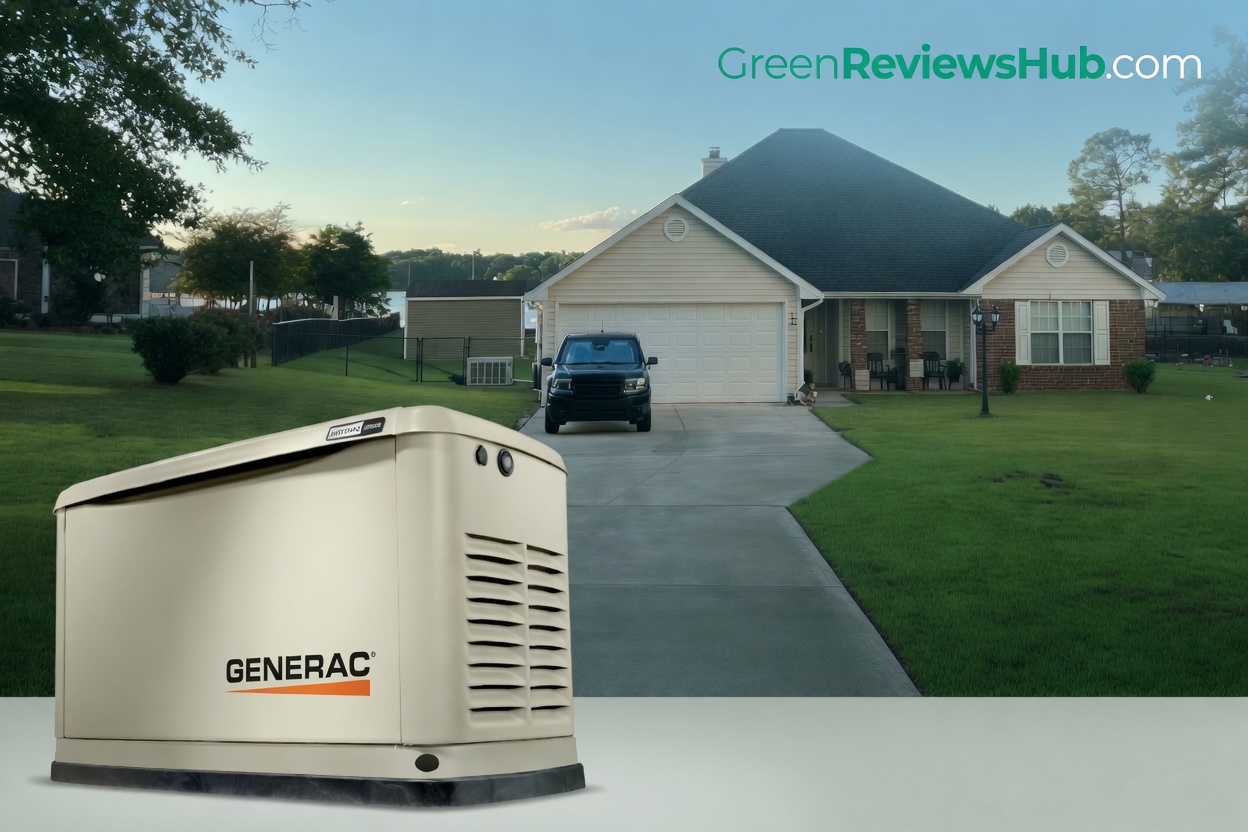
Keep your whole house running when the power goes out.
A whole-house standby generator turns itself on within 30 seconds of an outage and runs your fridge, AC, lights, internet, and well pump for days. Here are the 5 best 2026 models, ranked by what actually matters to families.
See the #1 Pick →We may earn a commission on qualifying purchases through links on this page, at no extra cost to you. Our recommendations are based on independent research — manufacturer specifications, independent lab data, and aggregated owner reports — not on commission rates.
California homeowners face a growing list of reasons to invest in backup power: PSPS wildfire shutoffs, aging grid infrastructure, extreme heat events, and utility rates that keep climbing. A whole house standby generator is the most reliable way to keep your entire home running when the grid goes down — no manual setup, no extension cords, no compromises.
Generac dominates the market with roughly 75% share in residential standby generators, but Kohler and Champion offer compelling alternatives at different price points. We researched all the major options and broke down the five best whole house generators you can buy in 2026 — including real installation costs, sizing guidance, and California-specific permitting considerations.
Quick Picks: Our Top 3
Generac Guardian 24kW (7210)
The sweet spot for most homes. 24kW on LP powers a 3,000+ sq ft home including central AC. Mobile Link WiFi monitoring, True Power technology, 200A transfer switch included. $7,399 unit / $8,000-$15,000 installed.
Generac Guardian 22kW (7043)
Same trusted Generac platform at a lower price. 22kW covers homes up to ~2,500 sq ft. WiFi monitoring, True Power, 200A switch. ~$5,500-$6,500 unit / $8,500-$11,500 installed.
Champion 14kW (100177)
The most affordable path to standby backup. 14kW handles essential circuits reliably. Dual fuel, quieter than most competitors, 10-year limited warranty. $3,800-$4,500 unit / $6,800-$9,500 installed.
Head-to-Head Comparison
| Generator | Price (Unit) | Output (LP) | Output (NG) | Transfer Switch | Warranty |
|---|---|---|---|---|---|
Generac Guardian 24kW (7210) Best Overall | $7,399 | 24,000W | 21,000W | 200A Whole-House | 5 Years |
Generac Guardian 22kW (7043) Best Value | $5,500-$6,500 | 22,000W | 19,500W | 200A Whole-House | 5 Years |
Generac Guardian 26kW (7291) Best for Large Homes | $8,000+ | 26,000W | 22,000W | 200A Whole-House | 5 Years |
Kohler 24kW Best Premium | $8,500+ | 24,000W | 21,000W | 200A (sold separately) | 5 Years |
Champion 14kW (100177) Best Budget | $3,800-$4,500 | 14,000W | 12,500W | 200A (optional) | 10 Years (limited) |
Generac Guardian 24kW (7210)
The gold standard for whole-house backup — powers everything including central AC
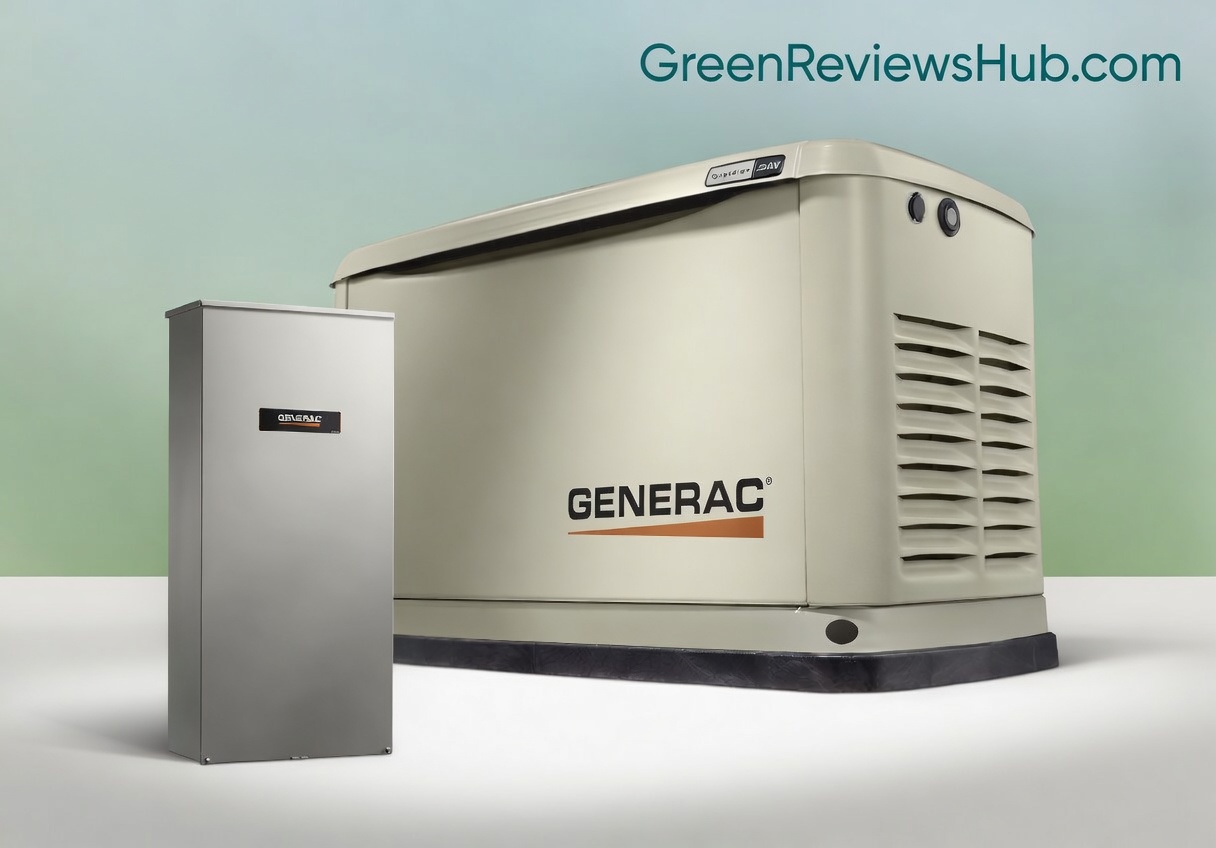
Generac Guardian 24kW shown next to the included automatic transfer switch — the unit that flips your house from grid power to generator power within 30 seconds.
What it is: A refrigerator-sized box that lives outside your house, runs on the natural gas line you already have (or a propane tank), and automatically turns on within 30 seconds when the power goes out — even if you're not home.
What you can run: Everything in a typical 3,000 sq ft home at the same time — central air conditioning, refrigerator, freezer, lights, internet/WiFi, garage door, oven, microwave, TV, phone chargers, and a well pump. You won't have to choose what to power; it just works.
How long it runs: Indefinitely on natural gas (the gas line never “runs out” in an outage). On a 500-gallon propane tank, you get roughly 5–7 days of non-stop operation under typical household load. It runs a self-test for 5 minutes once a week so you know it'll work when needed.
Noise: About as loud as a window AC unit at 23 ft (~67 dB). You'll hear it from the yard, but it won't wake you up indoors.
Maintenance: One annual service visit ($200–$350). Oil change, air filter, spark plug inspection. That's it. Otherwise it sits quietly and waits for the next outage.
Price (Unit)
$7,399
Output (LP)
24,000W
Output (NG)
21,000W
Noise Level
~67 dB
The Generac Guardian 24kW is the go-to choice for homeowners who want to back up their entire home without compromise. At 24,000 watts on LP (21,000W on natural gas), it can comfortably power a 3,000+ square foot home including central air conditioning, kitchen appliances, water heater, and all electronics simultaneously. There is a reason Generac holds roughly 75% of the residential standby generator market.
True Power technology keeps total harmonic distortion below 5%, which means clean, stable power that is safe for sensitive electronics like computers, home automation systems, and medical equipment. Mobile Link WiFi monitoring lets you check generator status, run diagnostics, and receive maintenance alerts from your phone. The included 200A whole-house automatic transfer switch means no choosing which circuits to back up — everything switches over within seconds of an outage.
Installed cost typically runs $8,000 to $15,000 depending on your location, gas line requirements, and local permit fees. The 5-year limited warranty covers parts and labor.
Pros
- Powers entire 3,000+ sq ft home including central AC
- True Power technology. safe for sensitive electronics
- Mobile Link WiFi monitoring and diagnostics
- 200A whole-house transfer switch included
- 75% market share = huge dealer/service network
- Dual fuel: natural gas or propane
Cons
- Higher upfront cost than 22kW model
- 67 dB noise level, audible from neighboring yards
- Professional installation required ($3,000-$5,000)
- Requires regular maintenance (oil changes, filter replacement)
- Natural gas output drops to 21kW (may matter for very large homes)
Generac Guardian 22kW (7043)
The smart pick for mid-size homes that want full coverage at a lower price
The Generac 22kW is the most popular Generac size — slightly smaller than the 24kW but big enough for most 2,500 sq ft homes.
What it is: The most popular Generac size — same idea as the 24kW (auto-on standby generator that runs on natural gas or propane), but slightly smaller and a few hundred dollars cheaper.
What you can run: Everything in a 2,500 sq ft home including a 3-ton central AC, fridge, lights, internet, microwave, washer/dryer (not at the same moment as AC + electric oven, but realistically yes for a normal family). If you have a smaller home or don't run two big appliances simultaneously, this is the smarter buy.
How long it runs: Same as the 24kW — indefinitely on natural gas, ~5–7 days on a 500-gal propane tank. Weekly 5-minute self-test built in.
Why pick this over the 24kW: Save ~$300–$700, get a slightly quieter unit, and avoid paying for capacity you won't use. If you live in a 1,500–2,800 sq ft home with a single AC unit, this is the right size.
Price (Unit)
$5,500-$6,500
Output (LP)
22,000W
Output (NG)
19,500W
Noise Level
~67 dB
The 22kW Guardian is the most popular standby generator in America for good reason. It delivers nearly the same performance as the 24kW model for roughly $1,000-$2,000 less. At 22,000 watts on LP (19,500W on natural gas), it comfortably powers homes up to about 2,500 square feet including central AC.
You get the same Mobile Link WiFi monitoring, True Power technology, and 200A whole-house transfer switch as the 24kW. The real question is whether your home needs that extra 2kW. For most homes under 2,500 square feet — even with central AC, a full kitchen, and multiple electronics — the 22kW is more than enough.
Installed, expect to pay $8,500 to $11,500 total. That $2,000-$4,000 savings over the 24kW model makes this the best value pick for the majority of California homeowners.
Pros
- Best price-to-power ratio in the Generac lineup
- Covers most homes up to 2,500 sq ft with AC
- Same WiFi, True Power, and transfer switch as bigger models
- Massive dealer and service network
- $2,000-$4,000 cheaper installed than the 24kW
Cons
- May fall short for homes over 2,500 sq ft with heavy loads
- Only 19,500W on natural gas. tight if running AC + range + dryer
- Same 67 dB noise level as the 24kW
- Still requires $3,000-$5,000 professional installation
Generac Guardian 26kW (7291)
Maximum residential power for large homes and heavy electrical demands
The 26kW is the largest air-cooled Generac — built for big homes with multiple AC units.
What it is: Generac's largest air-cooled standby model — designed for bigger houses (3,500–5,000 sq ft) or homes with two HVAC zones, hot tub, EV charger, and a well pump all potentially running at once.
What you can run: Two central AC units simultaneously, electric range, electric dryer, all kitchen appliances, plus all the “little stuff” (lights, internet, fridge, garage). If you've ever had to choose between cooling and cooking during an outage, the 26kW removes that choice.
How long it runs: Same as the smaller models — unlimited on natural gas, 5–7 days on 500-gal propane.
Why oversize? Bigger generators aren't just for big houses — they're for households that genuinely don't want to think about load shedding. Pay $500 more once, never worry about tripping the unit during an outage.
Price (Unit)
$8,000+
Output (LP)
26,000W
Output (NG)
22,000W
Transfer Switch
200A
The 26kW Guardian is the top of Generac's residential lineup. It exists for homeowners with large homes (3,500+ sq ft), multiple HVAC zones, electric vehicle chargers, pool equipment, or workshops with heavy-draw tools. The extra 2-4kW headroom over the 24kW model ensures you never have to worry about load management.
The 200A whole-house transfer switch is included. All the same Generac platform benefits apply: True Power, Mobile Link WiFi, dual-fuel capability. If your electrical panel audit shows total loads exceeding 22kW, this is the model to get.
Pros
- Most powerful residential Generac — handles any home load
- 200A whole-house transfer switch included
- Future-proof: handles EV chargers, pool pumps, workshops
- Same trusted Generac platform and dealer network
Cons
- Highest unit cost in the Generac Guardian line
- Overkill for homes under 3,000 sq ft
- Larger physical footprint — needs more clearance
- Higher fuel consumption during operation
Kohler 24kW Standby Generator
Premium build quality and quieter operation for those who want the best
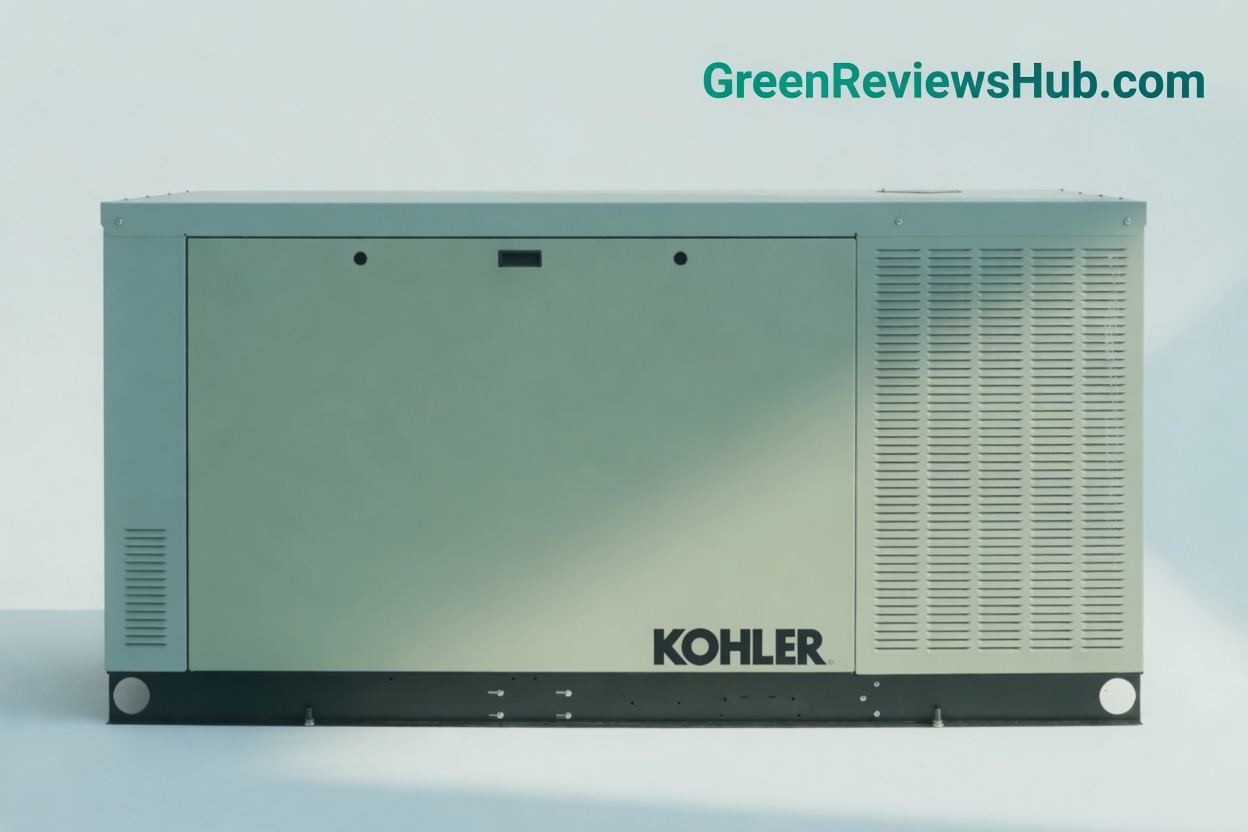
The Kohler 24kW costs more upfront than Generac but is built like a tank — heavier-duty engine, longer service intervals.
What it is: Kohler's competitor to the Generac Guardian. Same idea — a permanently installed standby generator — but built more like a commercial unit. It's heavier, the engine is beefier, and the warranty is longer (5 years vs Generac's 5 years too, but with better parts coverage).
What you can run: Same as the Generac 24kW — entire 3,000 sq ft home including central AC. The wattage is identical; the difference is in build quality and how it sounds (Kohler runs noticeably quieter at 64 dB vs Generac's 67 dB).
How long it runs: Indefinitely on natural gas. Service interval is 200 hours of runtime (or 2 years) versus Generac's 100 hours (or 1 year) — meaning fewer maintenance bills over the generator's life.
Why pay more: Lower noise, longer service intervals, and a reputation for outlasting Generac in commercial settings. If you plan to keep this generator for 20+ years and you're willing to pay $1,500+ extra upfront, Kohler is the buy-once-cry-once choice.
Price (Unit)
$8,500+
Output (LP)
24,000W
Output (NG)
21,000W
Noise Level
~65 dB
Kohler is the main alternative to Generac in the standby generator market and commands a loyal following among homeowners who prioritize build quality and quieter operation. The Kohler 24kW matches the Generac Guardian 24kW on raw output but typically runs a couple decibels quieter, which matters if the generator pad is near a bedroom window or a neighbor's property line.
Kohler's PowerBoost technology allows the generator to handle brief surges from motor startups (like air conditioners cycling on) without requiring a larger unit. The enclosure is corrosion-resistant and built to withstand harsh weather. Note that the automatic transfer switch is typically sold separately with Kohler, adding to the total installed cost.
Pros
- Premium build quality and corrosion-resistant enclosure
- Quieter than Generac (~65 dB vs ~67 dB)
- PowerBoost handles motor startup surges gracefully
- Strong reputation in commercial and industrial power
Cons
- More expensive than Generac for equivalent output
- Transfer switch sold separately, adds $800-$1,500
- Smaller dealer network than Generac
- Parts and service may be harder to find in some areas
Champion 14kW (100177)
Affordable standby power for essential circuits and smaller homes
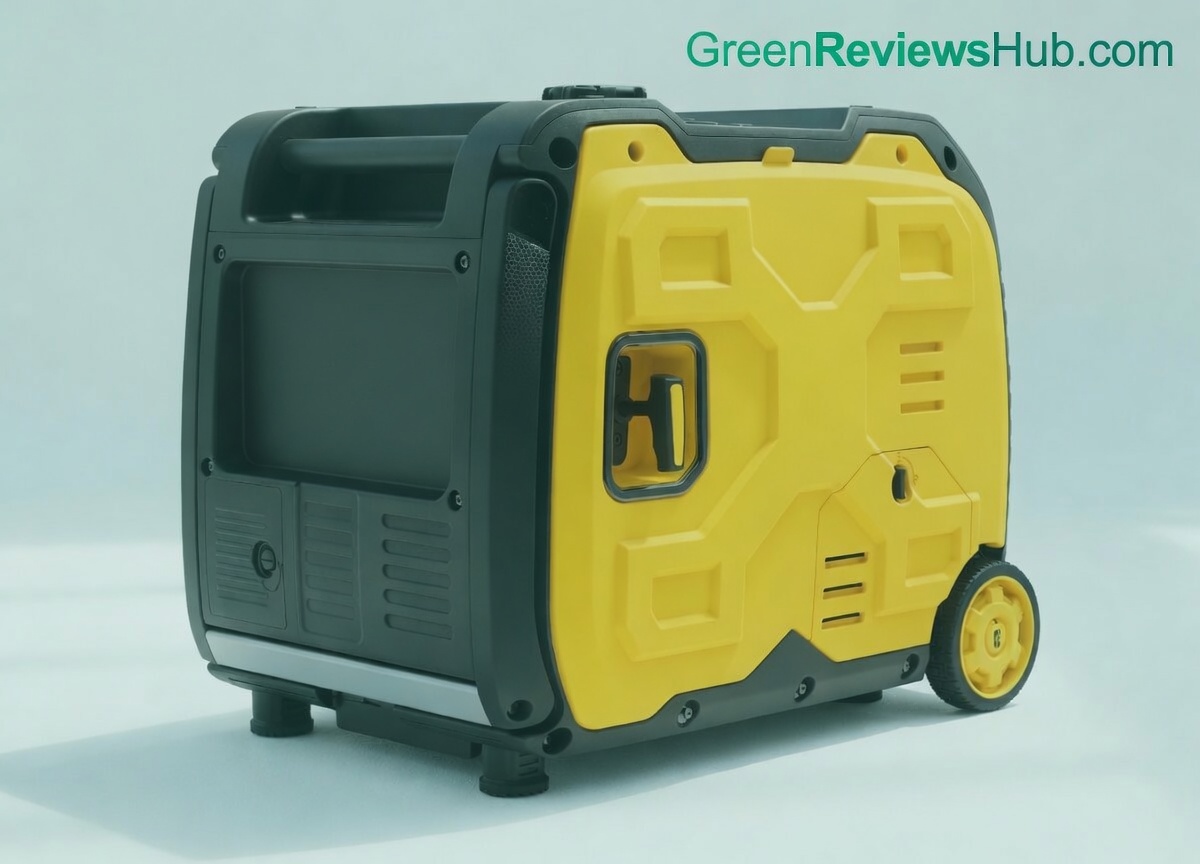
The Champion 14kW is a portable-style inverter — cheaper than Generac but you give up some convenience (it doesn't auto-start and is a smaller capacity).
What it is: The budget option. A smaller standby generator that's about half the price of the Generac 24kW. Great for smaller homes or as a starter generator that covers “the essentials” only.
What you can run: Realistically — fridge, freezer, well pump, gas furnace blower, lights, internet, phone chargers, and one small AC window unit. Not central AC, not an electric range, not a clothes dryer. You'll need to load-shed (turn things on one at a time).
How long it runs: Same as bigger units — natural gas is unlimited, propane 500-gal tank lasts about a week.
Why pick this: If you live alone or in a townhouse / 1,200–1,800 sq ft single-story home, you don't need 24kW. The Champion 14kW gets you the auto-on convenience for $4,000+ less upfront — a smarter spend for many families.
Price (Unit)
$3,800-$4,500
Output (LP)
14,000W
Output (NG)
12,500W
Warranty
10 Years
Champion has built a strong reputation in the portable generator market and their standby lineup brings that same value-first approach. The 14kW model is the most affordable way to get automatic standby backup for your home. At 14,000 watts on LP (12,500W on natural gas), it can handle essential circuits — refrigerator, lights, garage door, sump pump, router, and a few other devices — but it will not power a large central AC system and the rest of the house at the same time.
The standout here is the 10-year limited warranty, which is double what Generac and Kohler offer at this tier. Champion also runs a bit quieter at roughly 63 dB. The trade-off is a smaller dealer and service network compared to Generac.
Pros
- Most affordable standby generator on the market
- 10-year limited warranty (double the competition)
- Quieter operation at ~63 dB
- Dual fuel: natural gas or propane
- Total installed cost can be under $7,000
Cons
- Not enough power for whole-house backup with central AC
- Only suitable for essential-circuit coverage in most homes
- Smaller dealer/service network than Generac
- No WiFi monitoring standard (available as add-on)
- Transfer switch may need to be purchased separately
We asked 3 AIs: “Best whole-house generator for a 3,000 sq ft home?”
Same prompt, three frontier models. Two of three picked the same brand. Here's how they voted:
“Largest installed base, easiest service network, fits all common load profiles.”
“Best balance of price, power, and Mobile Link remote monitoring.”
“Lower noise (64 dB) and longer service intervals justify the premium.”
Two out of three picked Generac — and our research backs it up. But if quiet operation matters most, Kohler is the better long-term play.
Generator Sizing Guide: How Many kW Do You Need?
Choosing the right size is the single most important decision when buying a standby generator. Too small and you will overload the unit and trip breakers. Too large and you waste money on capacity you do not need. Here is how to calculate what your home requires.
Quick Sizing by Home Size
Common Appliance Wattage
| Appliance | Running Watts | Starting Watts |
|---|---|---|
| Central Air Conditioner (3-ton) | 3,000-3,500W | 4,500-5,000W |
| Electric Range / Oven | 3,000-5,000W | 3,000-5,000W |
| Electric Water Heater | 4,000-5,000W | 4,000-5,000W |
| Clothes Dryer (Electric) | 2,000-5,000W | 2,000-5,000W |
| Refrigerator | 100-400W | 800-1,200W |
| Sump Pump (1/2 HP) | 800W | 1,300-2,200W |
| Well Pump (1/2 HP) | 750W | 1,500-2,000W |
| Lights (whole home) | 500-1,500W | 500-1,500W |
| Garage Door Opener | 550-725W | 1,100-1,400W |
| EV Charger (Level 2) | 3,800-7,600W | 3,800-7,600W |
Pro tip: Add up the running watts of everything you want to power simultaneously, then add 20% headroom for startup surges. That total is your minimum generator size. A licensed electrician can do a full load calculation during the installation estimate — most Generac dealers offer this for free.
Natural Gas vs. Propane: Which Fuel Is Right?
Natural Gas
- Unlimited fuel supply — connected to utility gas line
- No tank to refill or maintain
- Lower cost per BTU in most areas
- Runs indefinitely during outages (if gas service is up)
- Produces slightly less power (10-15% fewer watts)
Best for: Homes with existing natural gas service
Propane (LP)
- Higher power output per unit (10-15% more watts)
- Available in rural areas without gas service
- Long shelf life — does not degrade like gasoline
- Independent of utility infrastructure
- Requires a tank (500-gallon common) and periodic refills
Best for: Rural properties, areas without natural gas, maximum power output
Most California suburban and urban homes have natural gas service, making it the default choice. Rural homeowners in areas like the foothills, Central Valley outskirts, or mountain communities often go with propane. A standard 500-gallon propane tank can power a 22kW generator under moderate load for roughly 5 to 8 days.
Installation Requirements and Costs
Standby generators require professional installation. This is not a DIY project — it involves electrical work, gas line connections, concrete work, and local permits. Here is what goes into a typical installation.
Installation Cost Breakdown
What the Installer Will Do
- Site assessment: evaluate placement options, clearances, and gas line routing
- Pour or set a level concrete pad for the generator to sit on
- Install the automatic transfer switch at your electrical panel
- Run gas line from your meter or propane tank to the generator
- Wire the generator to the transfer switch and test all circuits
- Program the generator for weekly self-test cycles
- Pull local permits and schedule inspection (required in most California cities)
California note: Most California cities and counties require a building permit for standby generator installation. The permit process typically takes 1-3 weeks and the cost is included in the installation estimate. Your installer should handle the permit application. Some HOAs may have additional requirements regarding placement, noise, and screening.
Standby Generator vs. Portable Power Station vs. Solar Battery
A whole house generator is not the only option for backup power. Here is how it compares to the other major categories.
| Feature | Standby Generator | Portable Power Station | Solar Battery (e.g., Powerwall) |
|---|---|---|---|
| Whole-house backup | Yes | Essential circuits only | Yes (with sufficient capacity) |
| Automatic switchover | Yes (seconds) | No (manual) | Yes (milliseconds) |
| Runtime | Unlimited (NG) / Days (LP) | Hours (depends on load) | Hours to days + solar recharge |
| Installed cost | $8,000-$15,000 | $1,500-$4,000 | $12,000-$20,000 |
| Fuel required | Natural gas or propane | None (battery) | None (solar + battery) |
| Maintenance | Regular (oil, filters, exercise) | Minimal | Minimal |
| Noise | 60-70 dB | Silent | Silent |
| Daily energy savings | None | None | Yes (offsets utility bill) |
Standby generators are the best choice when you need guaranteed whole-house backup for extended outages (days or more) and you want fully automatic operation. They are the only option that can truly run indefinitely on natural gas.
Portable power stations are ideal for short outages, apartment dwellers, and people who want backup they can also take camping or tailgating. See our best portable power stations guide for detailed comparisons.
Solar batteries offer the best of both worlds for daily savings and outage protection, but they cost more upfront and runtime is limited by battery capacity. Many California homeowners are pairing solar + battery with a standby generator for the ultimate hybrid backup system.
California-Specific Considerations
PSPS Wildfire Shutoffs
California's three major utilities (PG&E, SCE, and SDG&E) regularly implement Public Safety Power Shutoff events during high wildfire risk periods. These can last 24 hours to 5+ days and affect millions of customers. A standby generator is the most reliable defense — it kicks in automatically within seconds, powers your entire home, and runs for as long as gas service holds.
Permits and Regulations
Most California cities require a building permit for standby generator installation. Common requirements include minimum setback distances (typically 5 feet from structures and property lines), compliance with local noise ordinances, and a final inspection. Your installer should handle the entire permit process. Some municipalities in fire-prone areas may have additional requirements around spark arrestors and fuel storage.
Pair with Solar for Hybrid Backup
The smartest long-term play for California homeowners is combining rooftop solar with a standby generator. Solar panels with battery storage handle daily energy production and shorter outages, slashing your monthly utility bill by 30-50%. The generator serves as the ultimate safety net for extended multi-day events. This hybrid approach reduces fuel costs, minimizes generator runtime (extending its lifespan), and gives you complete energy independence.
Rising Utility Rates
California has the highest electricity rates in the continental United States, and they keep climbing. While a generator does not reduce your electric bill (it costs money to fuel and maintain), pairing it with solar panels does. Many California homeowners are investing in solar first for the daily savings, then adding a generator for peace of mind during major grid events.
Frequently Asked Questions
How much does a whole house generator cost installed?
A whole house standby generator typically costs $8,000 to $15,000 fully installed. The generator unit itself runs $5,000 to $8,000 depending on size and brand, while professional installation (concrete pad, automatic transfer switch, gas line connection, and permits) adds $3,000 to $5,000. Larger homes needing 24kW+ units will be at the higher end of this range.
Should I get a natural gas or propane generator?
If your home already has a natural gas line, natural gas is usually the better choice because you get an unlimited fuel supply and never need to worry about refilling a tank. Propane is ideal for rural areas without natural gas service. Propane generators produce slightly more power (about 10-15% more kW) than the same unit running on natural gas, and propane has a longer shelf life. Most Generac and Champion models are dual-fuel capable.
How loud is a whole house generator?
Modern standby generators typically operate at 60-70 dB measured at 23 feet, which is roughly equivalent to a central air conditioning unit or a normal conversation. The Generac Guardian series runs around 67 dB. Kohler generators are known for being slightly quieter. Most local noise ordinances allow generator operation during outages, but check your city or HOA rules for specific decibel limits.
What size generator do I need for my house?
Generator sizing depends on your home's total electrical load. As a general guide: homes under 1,500 sq ft typically need 10-16kW, 1,500-2,500 sq ft homes need 17-22kW, and homes over 2,500 sq ft with central AC need 22-26kW or more. The most accurate way is to add up the wattage of everything you want to power simultaneously. Central AC alone draws 3,000-5,000W, an electric range uses 3,000-5,000W, and a water heater uses 4,000-5,000W.
How long can a whole house generator run continuously?
Natural gas generators can run indefinitely as long as gas service is maintained, making them ideal for extended outages. Propane generators are limited by tank size: a standard 500-gallon propane tank can power a 22kW generator under moderate load for roughly 5-8 days. Most manufacturers recommend a maintenance check after 200-500 hours of continuous operation.
Can I pair a whole house generator with solar panels?
Yes, and it is an increasingly popular setup in California. Solar panels with battery storage handle daily energy production and routine outages, while a standby generator serves as the ultimate backup for extended multi-day events like PSPS shutoffs or major grid failures. This hybrid approach reduces fuel costs and generator runtime while giving you complete energy independence. Many California homeowners start with solar and add a generator for extra security.
Explore More Green Energy Reviews
GreenReviewsHub independently reviews portable power stations, solar products, e-bikes, and more to help you find the right gear for your home and lifestyle. Browse our full review library for unbiased, data-driven buying guides.
Browse All Reviews