Aventon Aventure 3 Review: The Best Fat Tire E-Bike for Adventure Riders?
We may earn a commission on qualifying purchases through links on this page, at no extra cost to you. Our recommendations are based on independent research — manufacturer specifications, independent lab data, and aggregated owner reports — not on commission rates.
Our Verdict
Aventon
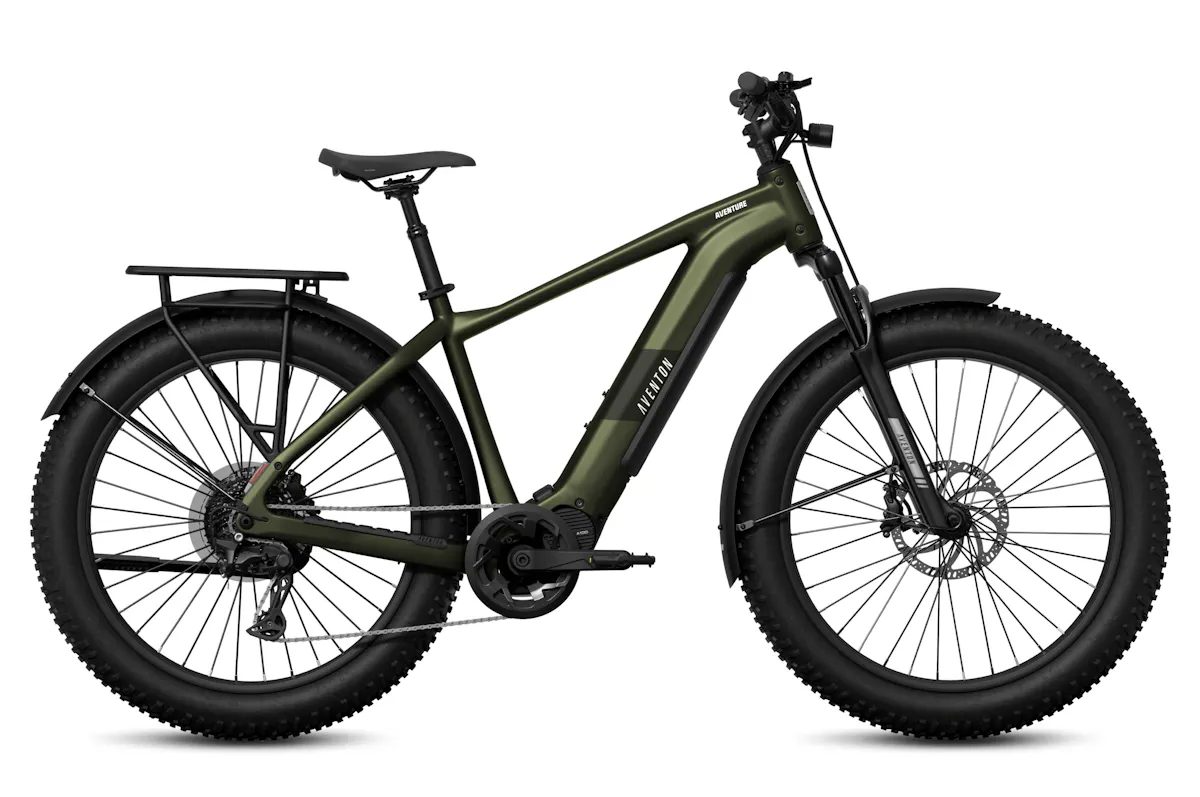
The Aventon Aventure 3 delivers a torque sensor, Class 3 speed (28 mph), a 720Wh battery, and a full accessory package for $1,899 — the best fat tire e-bike value under $2,000.
Best for
- Adventure and all-terrain riding
- Long-range commuting (40-60 mi)
- Natural, bike-like pedal assist
Not ideal for
- Heavy at 77 lbs
- Basic front suspension
Free shipping • Price verified today
Quick Verdict
The Aventon Aventure 3 is the fat tire e-bike to beat in 2026. Its torque sensor delivers a riding experience that feels genuinely bike-like, something most competitors at this price still get wrong with jerky cadence sensors. Add Class 3 speed (28 mph), a 720Wh battery good for 40-60 miles, hydraulic disc brakes, and a fully loaded accessory package (lights, fenders, rack, turn signals), and you get a bike that punches well above its $1,899 price tag. It is not perfect, 77 lbs is a lot of bike, and the suspension fork is basic. but for the money, nothing else combines this much performance, range, and ride quality in a fat tire package.
Best for:
- Adventure and all-terrain riding
- Long-range commuting (40-60 mi)
- Riders who want natural pedal assist
Not ideal for:
- Lightweight road riding (77 lbs)
- Riders on a tight budget under $1,500
- Carrying upstairs (no elevator access)
Overview: Why the Aventure 3 Stands Out
Aventon has been quietly building one of the most respected direct-to-consumer e-bike lineups in the US, and the Aventure 3 is their flagship fat tire model. What makes it interesting is not any single spec. It is how every spec works together to create a riding experience that feels more expensive than $1,899.
The headline feature is the torque sensor. Most e-bikes under $2,000 use cadence sensors, which detect whether you are pedaling and deliver motor assist in a binary on/off fashion. The Aventure 3's torque sensor detects how hard you are pedaling and scales the motor output proportionally. This sounds like a small distinction on paper. On the road, it is the difference between riding a motorcycle with pedals and riding an actual bicycle that happens to have a motor helping you.
Pair that with Class 3 speed (28 mph vs the 20 mph cap on most competitors), a massive 720Wh battery, hydraulic disc brakes, and a surprisingly complete accessory package. Integrated lights, fenders, a rear rack, and turn signals all included — and the Aventure 3 becomes very hard to argue against for anyone shopping fat tire e-bikes in 2026.
Key Specifications
| Price | $1,899 |
| Motor | 750W rear hub (sustained), 1,130W peak |
| Battery | 720Wh (48V 15Ah), removable |
| Range | 40-60 miles per charge |
| Top Speed | 28 mph (Class 3, pedal assist) |
| Weight | 77 lbs |
| Tires | 26" x 4" fat tires (puncture-resistant) |
| Frame | 6061 aluminum (step-over and step-thru options) |
| Gears | Shimano Alivio 8-speed |
| Brakes | Hydraulic disc (180mm front and rear) |
| Suspension | Front fork with lockout |
| Display | Color TFT with app connectivity |
| Sensor Type | Torque sensor (not cadence) |
| Included Accessories | Integrated lights, rear rack, fenders, turn signals |
Motor and Performance
The Aventure 3 runs a 750W rear hub motor that peaks at 1,130W. In practical terms, 750W sustained is the legal maximum for e-bikes in the US, and the 1,130W peak means the motor has headroom for hill climbing and acceleration without bogging down.
On flat ground, the bike accelerates smoothly to its 28 mph Class 3 limit with pedal assist. That 28 mph cap is a genuine advantage over Class 2 bikes (like most Rad Power models) that top out at 20 mph. The difference is significant: at 28 mph, you can comfortably keep pace with urban traffic, making the Aventure 3 a legitimate commuter bike, not just a trail toy.
Hill climbing is where the 1,130W peak comes into play. On moderate grades (5-8%), the motor pulls strongly with minimal speed loss. On steeper climbs (10-15%), you will slow down, but the combination of motor power and the Shimano Alivio 8-speed drivetrain means you can always find a gear that keeps you moving. The torque sensor is critical here — it ramps motor power up as you push harder into the pedals, which feels completely intuitive on climbs.
There is also a throttle that operates up to 20 mph independent of pedaling. This is useful for starting from a stop at intersections, navigating tight spaces, or resting your legs on long rides. It does not match the pedal-assist top speed of 28 mph, which is a Class 3 regulation, not a limitation of the bike itself.
Battery and Range: Real-World Numbers
The 720Wh battery (48V, 15Ah) is one of the largest in the sub-$2,000 fat tire category. For reference, the RadRover 6 Plus ships with a 672Wh pack, and many budget fat tire bikes are stuck at 500-600Wh.
Aventon claims 40-60 miles of range. Here is what that looks like in practice:
- PAS 1-2 (eco mode), flat terrain: 50-60 miles — achievable for lighter riders (under 180 lbs) on flat bike paths
- PAS 2-3 (mixed), rolling hills: 35-50 miles, this is the range most riders will see in real-world commuting
- PAS 4-5 (full power), hilly terrain: 25-35 miles. aggressive riding with frequent hills and headwinds
- Throttle only, flat terrain: 25-30 miles. no pedaling, full motor load
The battery is removable, which matters more than people realize. You can charge it off the bike — critical for apartment dwellers or anyone who parks in a garage but wants to charge indoors. A full charge takes approximately 5-6 hours from empty. There is no fast-charge option, which is one area where the Aventure 3 could improve.
One practical tip: the torque sensor inherently improves range compared to cadence sensor bikes. Because the motor scales with your effort rather than running at a fixed output, you naturally use less battery on flat sections where you are pedaling lightly. This is why torque sensor bikes consistently test closer to their advertised range than cadence sensor equivalents.
Torque Sensor vs. Cadence Sensor: Why This Matters
This is the single most important spec on the Aventure 3, and it is the feature that separates it from most of its competition. If you are comparing e-bikes and wondering why one "feels better" than another, the sensor type is almost always the answer.
| Feature | Torque Sensor (Aventure 3) | Cadence Sensor (most competitors) |
|---|---|---|
| How it works | Measures pedal pressure (how hard you push) | Detects pedal rotation (whether you are pedaling) |
| Assist feel | Proportional, push harder, get more help | Binary, motor is either on or off at a set level |
| Riding experience | Feels like a powerful bicycle | Feels like a moped with pedals |
| Response time | Instant. motor responds as you push | Delayed. 0.5-1.5 second lag is common |
| Battery efficiency | Better, motor idles when you pedal lightly | Worse, motor runs at set level whenever pedals move |
| Hill climbing | Motor automatically increases power as gradient steepens | Must manually switch to higher assist level |
| Exercise value | Higher — you control how much work you do | Lower. motor does most of the work regardless |
| Typical price premium | $200-500 more than cadence equivalents | Standard on most budget e-bikes |
The bottom line: if you have ever ridden a cadence sensor e-bike and thought "this feels weird" or "this does not feel like riding a bike," a torque sensor bike like the Aventure 3 will feel fundamentally different. For experienced cyclists, this is usually a dealbreaker — once you ride a torque sensor bike, cadence sensors feel crude. For first-time e-bike buyers, starting with a torque sensor means you will never have to "upgrade away" from a bike that feels wrong.
Build Quality and Components
The 6061 aluminum frame is available in both step-over and step-thru configurations, which is a thoughtful inclusion. The step-thru variant makes the bike accessible to a wider range of riders without compromising frame stiffness, Aventon reinforces the step-thru frame to maintain structural integrity.
Brakes: Hydraulic disc brakes with 180mm rotors front and rear. At 77 lbs plus rider weight, you need serious stopping power, and hydraulic discs deliver it. The lever feel is progressive and predictable. Mechanical disc brakes, still found on some competitors — would be a concern at this weight and speed class.
Drivetrain: The Shimano Alivio 8-speed is a workhorse groupset. It is not flashy, but it shifts reliably and handles the torque loads from the motor without complaint. The gear range is adequate for both flat cruising and moderate climbing.
Tires: The 26" x 4" fat tires are puncture-resistant and provide excellent grip on loose surfaces — gravel, sand, light snow, and wet pavement. They also absorb a significant amount of vibration, partially compensating for the basic front suspension.
Suspension: The front fork offers basic preload adjustment and a lockout for paved riding. It handles bumps and potholes adequately but does not have the travel or damping quality of a proper mountain bike fork. For its intended use — mixed terrain, bike paths, gravel roads, occasional trails — it is sufficient. If you plan to ride aggressive singletrack, look elsewhere.
Included accessories: Integrated front and rear LED lights, a sturdy rear rack rated for cargo, full-coverage fenders, and turn signals. On most competing bikes, you would pay $150-250 for these accessories separately. Aventon includes them out of the box, which makes the $1,899 price even more competitive.
Ride Quality
The Aventure 3 rides like a much more expensive bike than its price suggests. The torque sensor is the primary reason — pedal assist feels smooth and connected rather than jerky and artificial. At lower assist levels (1-2), you feel like you are riding a regular bike with a mysterious tailwind. At higher levels (4-5), the motor becomes more assertive, but the proportional response means it never lurches forward unexpectedly.
The fat tires create a plush, confidence-inspiring ride on any surface. They are one of the best features for riders who split time between paved paths and unpaved terrain. The tradeoff is rolling resistance, on smooth pavement, fat tires require more energy than skinny road tires. The 720Wh battery and 750W motor compensate for this, but it is worth noting that a similarly specced bike with narrower tires would have noticeably longer range.
Handling at speed (20-28 mph) is stable and predictable. The geometry is relaxed, the wheelbase is long, and the wide tires resist twitchiness. It is not a nimble urban weaver; the weight and tire width make tight turns slower than on a lighter bike, but at speed on roads and bike paths, it tracks straight and inspires confidence.
Smart Features and App
The color TFT display is a significant upgrade over the basic LCD screens on most competitors. It shows speed, battery level, assist level, trip distance, and odometer with clear, readable graphics even in bright sunlight.
The Aventon app connects via Bluetooth and adds GPS tracking, ride history, firmware updates, and the ability to customize assist levels and speed limits. You can restrict the bike to Class 2 (20 mph) for trails that require it, or set custom speed limits for younger riders. The app also enables turn-by- turn navigation and ride logging.
The integrated turn signals are a standout safety feature that most e-bikes still lack. They are controlled from the handlebar and are bright enough to be visible in daylight. For commuters riding in traffic, this is a meaningful safety improvement over hand signals. Especially when you need both hands on the bars in heavy traffic or on rough surfaces.
Ready to ride?
In stock at Aventon.com with free shipping, check current price and any seasonal promos.
Aventon Aventure 3 vs. Rad Power RadRover 6 Plus vs. Lectric XPeak
Here is how the Aventure 3 stacks up against two of its most popular competitors in the fat tire e-bike category:
| Spec | Aventure 3 | RadRover 6 Plus | Lectric XPeak |
|---|---|---|---|
| Price | $1,899 | $1,999 | $1,399 |
| Motor | 750W / 1,130W peak | 750W / 1,100W peak | 750W / 1,100W peak |
| Battery | 720Wh | 672Wh | 672Wh |
| Sensor | Torque | Cadence | Torque |
| Class | Class 3 (28 mph) | Class 2 (20 mph) | Class 3 (28 mph) |
| Range | 40-60 mi | 25-45 mi | 40-60 mi |
| Brakes | Hydraulic disc | Hydraulic disc | Hydraulic disc |
| Display | Color TFT + app | LCD + app | Color LCD |
| Turn Signals | Yes, integrated | No | No |
| Weight | 77 lbs | 73 lbs | 72 lbs |
| Suspension | Front fork (lockout) | Front fork | Front fork |
Aventure 3 vs. RadRover 6 Plus: The Aventure 3 wins on nearly every measurable spec. torque sensor vs. cadence, 28 mph vs. 20 mph, 720Wh vs. 672Wh, color TFT vs. LCD, integrated turn signals vs. none — and it costs $100 less. The RadRover's main advantage is Rad Power's extensive dealer and service network, which matters if you want local hands-on support. But on pure product merit, the Aventure 3 is the better bike.
Aventure 3 vs. Lectric XPeak: The XPeak is the value play at $1,399 and also offers a torque sensor and Class 3 speed. It is a compelling option for budget- conscious buyers. The Aventure 3 justifies the $500 premium with a larger battery (720Wh vs 672Wh), a color TFT display with app connectivity, integrated turn signals, and generally more polished fit and finish. If you can afford the Aventure 3, it is the better long-term buy. If $1,399 is your ceiling, the XPeak is excellent for the money.
Who Is the Aventon Aventure 3 Best For?
- Commuters who want speed: 28 mph Class 3 lets you keep pace with traffic. The 40-60 mile range handles round trips that would drain smaller batteries.
- Adventure and trail riders: Fat tires, front suspension, and a sturdy frame handle gravel, dirt, sand, and light snow. Not a mountain bike, but far more capable off-road than any road-tire e-bike.
- Experienced cyclists: The torque sensor delivers a riding experience that cyclists will actually enjoy, not just tolerate. If you come from traditional bikes, this will feel natural.
- Heavier riders (200+ lbs): The 750W/1,130W motor, robust frame, and fat tires handle higher rider weights better than many thinner-tired alternatives.
- Riders who want one bike for everything: With the included rack, fenders, lights, and turn signals, it works as a commuter, errand runner, trail bike, and weekend explorer without buying a single accessory.
Pros and Cons
Pros
- Torque sensor delivers natural, bike-like pedal assist
- Class 3 speed (28 mph), 40% faster than Class 2
- 720Wh battery with 40-60 mile range
- Hydraulic disc brakes (essential at this weight/speed)
- Complete accessory package included (lights, rack, fenders, turn signals)
- Color TFT display with Bluetooth app
- Step-over and step-thru frame options
- Removable battery for indoor charging
- Puncture-resistant fat tires
Cons
- Heavy at 77 lbs — difficult to carry up stairs
- Front suspension is basic. Not for aggressive trail riding
- No fast-charge option (5-6 hours full charge)
- Fat tires increase rolling resistance on pavement
- Limited Aventon service network vs. Rad Power
- No rear suspension
- Throttle limited to 20 mph (Class 3 only via pedal assist)
Final Verdict
The Aventon Aventure 3 is the best fat tire e-bike you can buy under $2,000 in 2026. The torque sensor alone would justify its price over cadence-sensor competitors, but Aventon goes further. Class 3 speed, a 720Wh battery, hydraulic brakes, a color TFT display, and a full accessory package that most brands charge extra for.
It is not a perfect bike. The 77 lb weight limits who can practically handle it, the front suspension is adequate but not impressive, and the 5-6 hour charge time is slower than ideal. But these are compromises inherent to the fat tire category, not failings specific to the Aventure 3.
If you want a bike that rides well on pavement and off it, commutes at a useful speed, lasts 40+ miles on a charge, and does not feel like a cheap electric appliance with pedals bolted on — the Aventure 3 is the one to buy. The torque sensor is the difference, and at this price, nothing else matches the complete package.
Frequently Asked Questions
What is the real-world range of the Aventon Aventure 3?
Aventon rates it at 40-60 miles. In real-world mixed riding (PAS 2-3, moderate hills), most riders see 35-50 miles. Throttle-only on flat ground yields around 25-30 miles. Range varies with rider weight, terrain, assist level, and temperature.
Does it have a torque sensor or cadence sensor?
Torque sensor. This measures how hard you push the pedals and delivers proportional motor assist. It creates a much more natural ride feel than the on/off assist of cadence sensors found on most competitors like Rad Power bikes. This is one of the Aventure 3's biggest advantages.
Is it Class 2 or Class 3?
Class 3, with a pedal-assisted top speed of 28 mph. The throttle works up to 20 mph (Class 2 mode). You can restrict the top speed to 20 mph in the settings for trails or paths that require Class 2 compliance.
How heavy is the Aventure 3?
Approximately 77 lbs with the battery. The removable battery weighs about 8 lbs, bringing the frame to roughly 69 lbs without it. This is typical for a fat tire e-bike with a 720Wh battery.
Can you ride it in the rain?
Yes. The electrical components are water-resistant and the fat tires provide excellent wet traction. Avoid submerging the motor or battery, and dry the bike after heavy rain rides, but normal wet-weather commuting is fine.
How does it compare to the RadRover 6 Plus?
The Aventure 3 ($1,899) offers a torque sensor, Class 3 speed (28 mph), a larger 720Wh battery, a color TFT display, and integrated turn signals. The RadRover 6 Plus ($1,999) uses a cadence sensor, is limited to Class 2 (20 mph), has a 672Wh battery, and uses a simpler LCD display. The Aventure 3 delivers more performance for $100 less.
The Bottom Line
The e-bike market is crowded, and most fat tire models under $2,000 are nearly interchangeable on paper. The Aventon Aventure 3 separates itself with the one spec that affects every second of every ride: the torque sensor. Combined with Class 3 speed, a large battery, and a genuinely complete accessory package, it offers the best overall value in the fat tire e-bike category. Whether you are commuting through the city, exploring fire roads on the weekend, or riding through a California beach town, the Aventure 3 does it all — and it does it better than anything else at this price.
Final Verdict
Ready to Order the Aventon?
If you want a fat tire e-bike that rides well on and off pavement, commutes at a useful 28 mph, and includes every accessory out of the box, the Aventure 3 is the one to buy.
We may earn a commission at no extra cost to you. Prices verified October 2026.
Still comparing?
See how this compares against other top options in our full review.
Browse All Reviews